Logo History: Take a Walk With Us
Updated June 3, 2025
“The strongest logos tell simple stories,” said Sol Sender, co-founder of Sender LLC, designer of US President Barack Obama’s campaign in 2008. Sender’s observation about storytelling through design reflects a fundamental principle that separates iconic brands from forgettable ones.

2008 Barack Obama logo mark created by Sol Sender
When Sender and his team created the Obama 2008 campaign logo, they understood that effective logos function as visual shorthand for larger narratives.
The rising sun symbol over stylized fields told a story of hope, renewal, and progress that resonated with millions of voters. This demonstrates how the most enduring logos distill complex ideas into simple, instantly recognizable forms.
For generations, logos have become the attention-grabbers of the market for every business.
Consider other legendary logos that follow this principle.

Nike’s swoosh suggests movement and achievement without needing explanation.

Apple’s bitten apple hints at knowledge and innovation while remaining elegantly minimal.

McDonald’s golden arches evoke warmth and accessibility through their simple arc shape.
Each tells a story in seconds, creating emotional connections that transcend mere brand recognition.
Knowing how logos developed through time is crucial since you can get both inspiration and effectively plan what you want your logo to be using a logo maker.
A Walk Down Logo Lane
Art intertwines with the origins of logos. Thus, will you believe us when we tell you that logos have existed even in ancient times?
That’s right. Every ancient civilization had its mark. Their art is how we identify them today—a characteristic of an effective logo if you think about it.
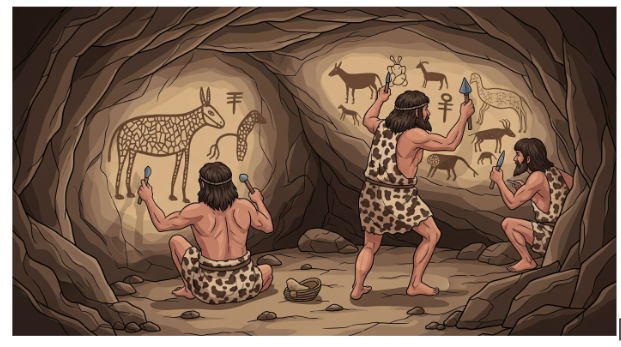
It all starts in 70,000 to 7000 BC with the wall carvings of our prehistoric ancestors. We know that mammals lived with humans because they painted them.
Moving forward, from the hieroglyphics of Egypt to the cylinder stamps of Mesopotamia, each civilization had an identifying mark. Assyria had its Hammurabi Code on a stone slab. Persia has its ceramic art and ornate walls.
From there, we touch on the 900 to 1300 AD—the Middle Ages, following ancient times.
King Richard II declared that all establishments brewing beer needed to have an identifying mark. Another aspect of logos is the face of a business. This declaration became law since water wasn’t much of a safe drink at the time.
Aside from that, emblems were the trend, especially as family crests. It represented men from each family and became their kind of branding. Heraldry is this kind of design with specific colors and imagery like animals or patterns on shields to represent the household.
When printing was invented
Let’s advance into the printing era. Now, we give a much more defined purpose to logos. The rise of the printing press in 1440 paved the way for more unique designs.
Each printing house needed to get heard and recognized from the rest. And what do newspapers have in common?
Advertisements.
Each business wants to feature its products and services in papers that everyone can read. Thus, by the mid-1600s, sophisticated logo designs came to life. Each advert showcases specific businesses in each niche.
A business could have an outline of a loaf for a bakery.
Food Bread Bakery by BrandCrowd
Or a cowboy boot attached to the leg of a woman or male, all these because enterprises wanted exposure to reach a broader market.
Texas Cowboy Boots by BrandCrowd
The introduction of chromolithography
But the current logo design era we are in started in the 1800s. The art of chromolithography came to life, which is printing in multi-color. This phenomenon promoted colored printing of newspapers, advertisements, and even posters for plays and movies.
Color psychology, pioneered by Johann Wolfgang von Goethe’s “Theory of Colors” aided in the accent of our beautiful logos today. Hence, by 1876, the history of modern logos began.
It wasn’t art but a method of branding to claim ownership of craftsmanship.
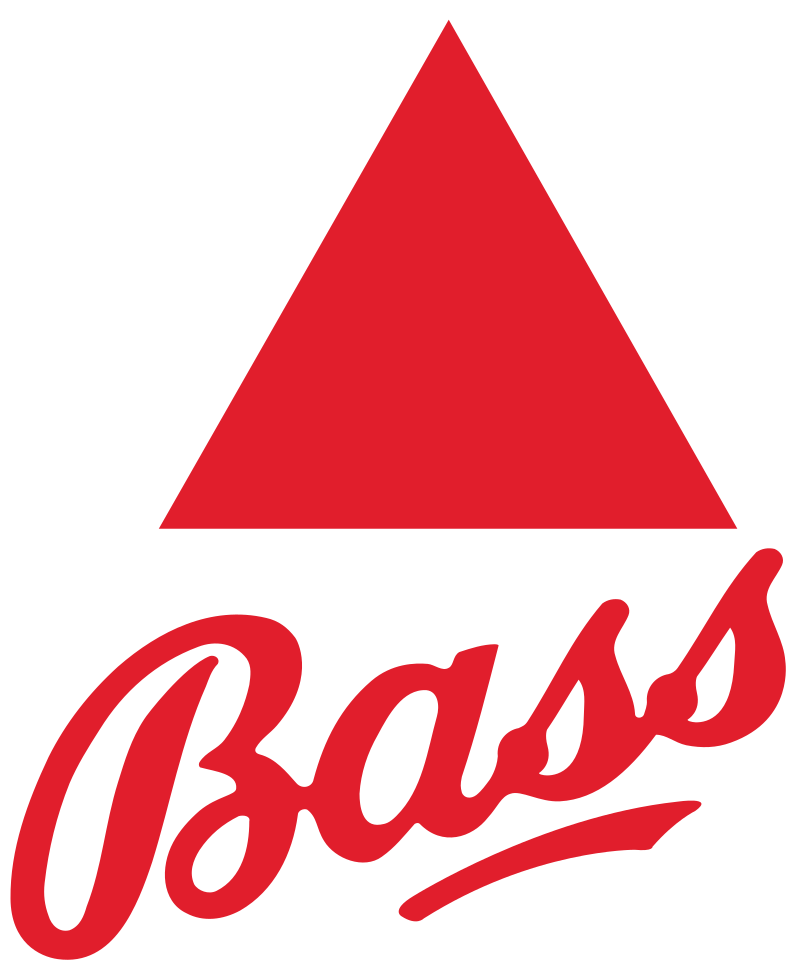
For example, Bass Brewery had a minimalistic style with the red triangle atop “Bass.” In 1886, Coca-Cola came out with its stylistic font logo, distinguishing itself from Bass Brewery.
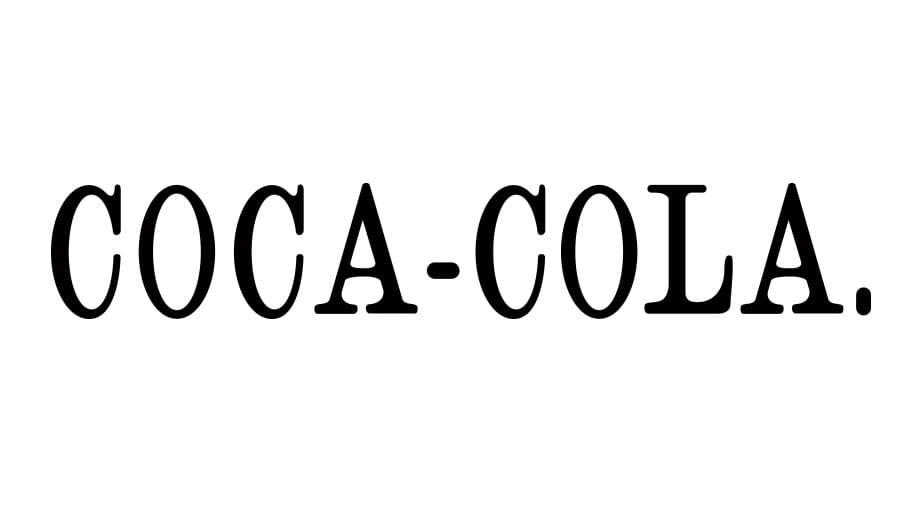
Coca-Cola in 1886…

…vs the Coca-Cola Symbol we are all familiar with.
And since these transpired in the Industrial Revolution, everything was getting massed produced. By 1910 and 1913, logos dominated every corner or city of Europe and the United States.
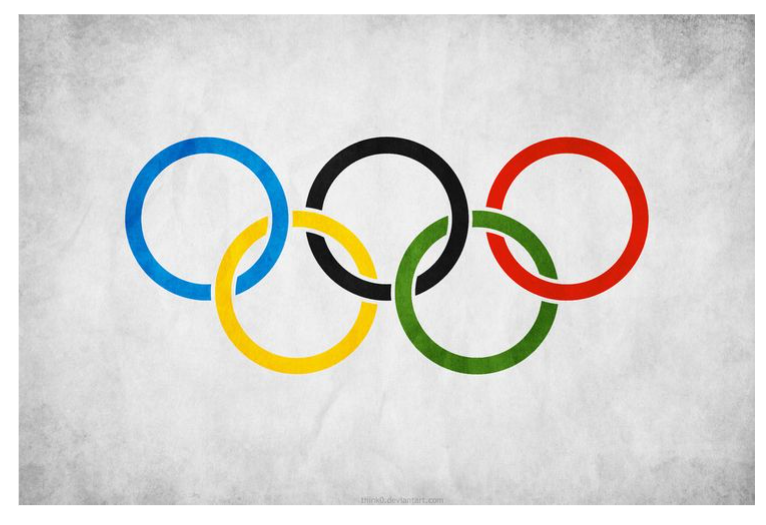
In 1914, Pierre de Coubertin designed the Olympic flag with the five circles representing each of the five contents united for the Olympics. This occurrence cemented the logo’s meaning as not just a face of a business but a mark that encompasses cultures worldwide.
Logos have become like a recorder of history since it changes the era. Let’s get into the last stage of logo design: the present modern feel.
Businesses started to notice that their logos needed to be thought-provoking. It needs to grab the attention of its prospective market in a good way.

Take a look at IBM’s logo. It had a literal eye, bee, and M in their 1956 design by Paul Rand. Gone are the days of simplistic stencils and wordmarks, with baffling logo designs that truly exude who you are as a business.
From there, technology came into the picture and aided business design. Software like Adobe Photoshop and InDesign became tools that revolutionized the design experience.
We have a flat design that can be printed and posted on social media platforms. They’re one of the most effective methods of strengthening your branding online.
Achievement Unlocked: Logo History Buff!

And there you have it, a history of logos narrated to you by yours truly. We hope you learned a lot from this article. Despite this topic being common, you can never have too much information about logo creation.
Having everything you need to know about logos allows you to decide how you want your brand identity to be. We can help you in that area, especially in the design portion.
Here at BrandCrowd, we make design decisions easy. You have more control over what you want as a logo with our 75,000+ templates. Or you could hire a designer over at DesignCrowd. You can even have AI generate a logo for you at Design.com.
Either way, you’ll do great! Just reach out to us, and we’ll be there for you.